


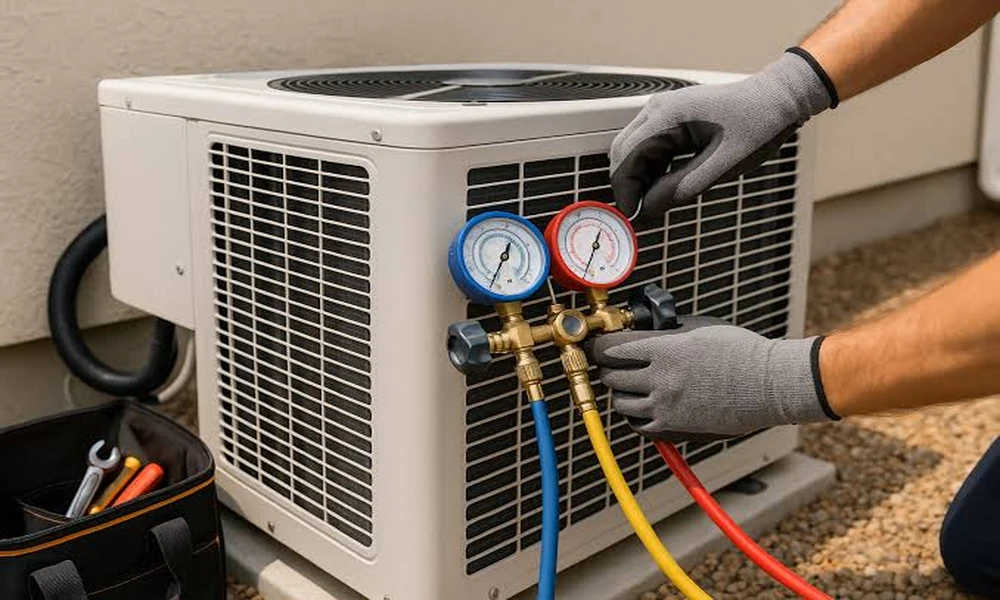
Ask any cooling technician in the Sacramento Valley when the phones ring hardest and the answer rarely points to the middle of August. It points to the first real heat wave of the year, the week when forecasts jump from the comfortable 80s into triple digits almost overnight. Systems that hummed along through a mild spring suddenly stall, trip breakers or blow warm air, and it can feel like the equipment picked the worst possible moment out of spite.
There is nothing random about it. Heat is the test that exposes every weak part at once, which is why scheduling ac repair in Roseville during a July heat spell often means joining a long line. The crew at all1mechanical.com, a locally owned outfit based off Melody Lane that has handled residential and commercial cooling since 2018, keeps phones answered around the clock for that reason. Still, knowing how a system breaks down under heat helps any homeowner spot trouble early, tell a real failure from a normal struggle and describe the problem clearly when help is needed.
The Outdoor Unit Fights Uphill
An air conditioner does not create cold. It moves heat from inside the house to the outside, and the condenser in the yard is where that heat gets dumped. To shed heat, the refrigerant in the condenser coil has to be hotter than the surrounding air. On a 90 degree afternoon that is easy. At 108 degrees the system has to push refrigerant temperatures and pressures much higher to stay ahead, and the compressor draws more electrical current to do it.
Everything in the outdoor unit feels that extra load. Pressures climb, motors run hotter and electrical parts carry more amperage than they do on any other day of the year. A component that was already worn may survive months of moderate use and then fail on the first afternoon that demands its full rating.
The dirt factor
A dirty condenser coil makes the climb steeper. Roseville sits near open fields and grassland, and the fins on outdoor units collect dust, dried grass, spring cottonwood fluff and leaves blown against the cabinet. Even a thin layer acts like a blanket, trapping heat the coil is supposed to release. A clean coil can be the difference between a system that keeps up at 105 degrees and one that trips its high pressure safety and shuts down.
Small Parts That Cook First
Most heat wave breakdowns trace back to inexpensive electrical components rather than catastrophic failures.
The run capacitor is the usual suspect. It is a small cylinder that gives the compressor and fan motors the electrical boost they need to start and run efficiently. Capacitors slowly lose capacity over the years, and heat speeds that decline. When one weakens far enough, the outdoor fan may hum without spinning or the compressor may struggle to start, sometimes overheating and shutting off on its own internal protection. A bulging or leaking top is a telltale sign, though many fail without any visible clue.
The contactor is another common culprit. It is the switch that sends power to the outdoor unit when the thermostat calls for cooling. Every cycle creates a tiny arc across its contacts, and over time those surfaces pit and burn. In peak season the system cycles more often and carries more current, so a contactor that was barely hanging on may stick open, leaving the indoor fan running while nothing happens outside, or stick closed, keeping the outdoor unit running even after the thermostat is satisfied.
Condenser fan motors round out the list. Bearings dry out, windings break down and a motor that has been running hot for several summers may simply stop. Without that fan, the condenser cannot shed heat at all, and the compressor shuts down within minutes.
Trouble That Hides Until the Heat Arrives
Some problems stay invisible in mild weather and only show their hand when the house needs full capacity.
A slow refrigerant leak is the classic example. A system missing part of its charge might cool the house just fine in May, when it only needs to drop the temperature a few degrees. In July, that same system runs nonstop and still loses ground. Low refrigerant can also cause the indoor coil to get too cold and ice over, which blocks airflow and makes cooling worse. Refrigerant does not get used up like fuel, so a low charge always means a leak somewhere, and simply topping it off without finding the source only delays the next failure.
Airflow problems behave similarly. A clogged filter, closed registers or a blower running at the wrong speed may go unnoticed until the system runs for hours on end. Restricted airflow can freeze the indoor coil, and when that ice melts, it can overwhelm the condensate drain. In homes with attic air handlers, a clogged drain line or rusted secondary pan can send water through the ceiling, which turns a cooling problem into a drywall repair as well.
Before calling for help, a few quick checks can save time and sometimes an unnecessary visit.
- Confirm the thermostat is set to cool and the batteries, if it uses them, are fresh.
- Check the electrical panel for a tripped breaker and reset it only once. A breaker that trips again points to a real fault.
- Look at the air filter and replace it if it is gray and packed with dust.
- Walk outside and see whether the condenser fan is spinning while the system runs.
- If you see ice on the refrigerant lines or indoor coil, switch the system off and run only the fan so it can thaw.
Anything beyond that, especially work involving capacitors, contactors or refrigerant, belongs in the hands of a licensed technician. Capacitors can hold a dangerous charge even with the power off.
When Nothing Is Actually Broken
Not every warm house during a heat wave has a failed air conditioner. Residential systems are designed around a typical hot day for the area, not the most extreme afternoon on record. As a general rule, a healthy central system can hold the indoor temperature roughly 20 degrees below the outdoor temperature when running at full capacity. On a 112 degree day, a house that settles around 80 degrees may simply be working at its design limit.
A technician can verify that by measuring the temperature drop across the indoor coil, usually somewhere in the range of 15 to 20 degrees on a properly working system. If those numbers look right, the answer is not repair but help. Closing blinds on west facing windows, avoiding the oven in late afternoon, sealing duct leaks in the attic and running the system steadily rather than turning it off and on all reduce the load the equipment has to carry.
Getting Ahead of the Next Heat Wave
The most effective repair is one scheduled before the system is pushed to its breaking point. A spring checkup that includes cleaning the condenser coil, testing the capacitor against its rated value, inspecting the contactor and confirming refrigerant pressures catches most of the failures that otherwise appear during the first triple digit stretch.
Timing matters as much as the inspection itself. The National Weather Service publishes a seven day HeatRisk forecast that shows when dangerous heat is on the way, and checking it during late spring offers a natural reminder to book service before every other household in the region has the same idea. For older residents, infants or anyone with health conditions that make heat dangerous, a working air conditioner is more than comfort, so planning ahead carries real weight.
Heat waves will keep arriving in the valley every summer. A system that has been cleaned, tested and trusted before the forecast turns is far more likely to ride them out without a midnight breakdown.